What a Nervous System Reset Actually Means
Theta binaural is sold as a nervous-system reset. Here is what theta rhythms and heart-rate-variability research actually support, and where 6 Hz sits in that picture.
The word reset does a lot of quiet work. It implies a switch you can flip: a frazzled nervous system on one side, a calm one on the other, and a clean click in between. Ninety minutes of theta binaural, the playlists suggest, and you cross that line. It is a satisfying image, and it is the wrong one. What the research actually supports is slower and less dramatic than a switch, and, unlike a switch, parts of it can be measured.
Two questions hide inside the promise. One is about the sound itself: is this track really carrying a 6 Hz theta rhythm, or is it just labeled that way? That is a measurement, and it settles in seconds. The other is about the body: does a theta session change anything a sensor could pick up? That one the literature answers more carefully than the word reset lets on.
What the claim actually is
A theta binaural session works by playing two steady tones, one in each ear, tuned a few hertz apart. The brain registers the difference between them as a slow pulse, the binaural beat. Set the left ear to 200 Hz and the right to 206 Hz, and the perceived beat lands at 6 Hz, squarely inside the theta band.
The pitch built on top of that is the reset story: guide the brain toward theta, and the nervous system follows, dropping out of a wired, sympathetic-dominant state and into something calmer. It is an appealing narrative because it sounds mechanical, like tuning an engine. The honest version keeps the mechanism but drops the certainty. There is real science under the theta band. It just does not describe a switch.
What the science actually shows
Start with what theta rhythms are associated with. In the literature, theta waves in the 4 to 8 Hz range track deep relaxation, meditative states, and the quiet, inward-turned activity of the brain’s default-mode network at rest (Scheeringa et al., 2008; Lomas et al., 2015). Theta, in other words, is a signature that tends to show up when a person is calm and internally focused rather than alert and outward-facing. That is a genuine and repeatable correlation.
Then there is the body side of the claim, which is where the more concrete evidence sits. Low-frequency sound has been associated with parasympathetic activation, the vagal, rest-and-digest branch of the autonomic nervous system, measured through heart-rate variability roughly thirty minutes after a session ends (Kantor et al., 2022; a 2025 Frontiers in Sports and Active Living study). Heart-rate variability is not a mood report; it is a physiological readout of autonomic balance. A measured shift toward parasympathetic tone is about as close as this field gets to an objective marker of relaxation.
Notice what those two tiers actually establish together. Theta is a correlate of rest, and low-frequency sound is associated with a measurable autonomic shift afterward. That is a real, defensible foundation. What it does not establish is that a specific tone forces the brain into a target state on command. The studies measure states and shifts; they do not certify a switch.
What we measured
We do not use recordings for this. The session is built from tones we generate and then verify, so the numbers on the label are numbers we can show.
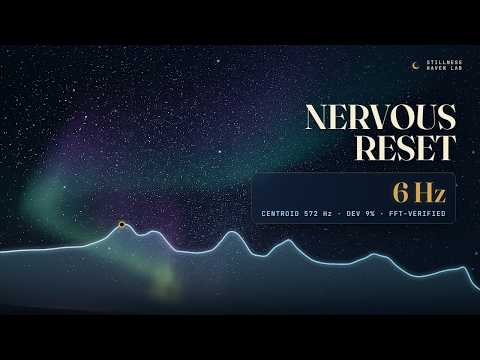
The receipt: a binaural configuration of Left 200 Hz and Right 206 Hz, a 6 Hz theta differential, with a measured spectral centroid of 572 Hz and a binaural level of -22 dB. The carrier sits at a comfortable low-mid 200 Hz rather than at some raw pure tone, the 6 Hz offset on the right channel is what your auditory system reads as the theta beat, and the centroid describes where the tonal weight of the ambient bed actually rests. The -22 dB level keeps the beat subtle enough for a ninety-minute session without becoming intrusive.
We publish that configuration in the description of every Recovery session, on purpose. Many tracks bury a 200 Hz carrier and print only the headline frequency; we state the carrier, the offset, and the level so the claim can be checked rather than trusted.
The honest limits
Here is where cherry-picking would be easy and would be wrong. Theta being a correlate of rest (Scheeringa et al., 2008; Lomas et al., 2015) is not the same as evidence that a sound reliably produces theta on demand. The heart-rate-variability findings (Kantor et al., 2022; a 2025 Frontiers in Sports and Active Living study) come from low-frequency sound studied broadly, with modest effect sizes and real variation between people, not from trials of a 6 Hz binaural beat in particular.
And the specific number deserves specific honesty: 6 Hz sits mid-band and is a reasonable, representative theta target, but there is no direct peer-reviewed trial of 6 Hz on its own. We chose it as a central point in the theta range, not because a study crowned it. Claims that a single tone can reset the nervous system like a machine have no clear mechanism in the literature, and we do not make them. The defensible version of reset is quieter: a session that may help you settle from a keyed-up state back toward a calmer autonomic baseline, the kind of shift heart-rate variability can register after the fact. If you want to hear what that config sounds like across a full ninety minutes, the companion session runs the exact tones described above.
Verify it yourself
You do not have to take our word for the beat, and you should not take anyone’s. A binaural beat is easy to check because it is not one sound but two. Split the track into its left and right channels and run each through a free spectrum analyser. You should see a clear carrier peak near 200 Hz on the left and near 206 Hz on the right. The distance between those two peaks is the beat frequency: 6 Hz, the theta target on the label.
A lot of files sold as theta sessions do not survive that test. The two carriers sit at the wrong distance, or one channel is missing the offset entirely, or the beat drifts. The claim and the measurement should agree. When they do not, on our tracks or anyone else’s, you have learned something useful, and it took less time than reading this section.
Not medical advice. These sessions support relaxation and general wellness, and are not a treatment for any medical condition.
 Listen · FFT-verified session What a Nervous System Reset Actually Means Watch on YouTube →